A kitten trapped inside an excavator at an Ohio job site eventually inspired Komatsu and River Reach Construction to create a collection of T-shirts, stickers, plush toys and other branded merchandise celebrating the new feline celebrity.
The kitten, named Komatsu and affectionately known as Sue, captured attention online after construction workers shared the story of her rescue. What began as a spontaneous moment of compassion grew into a collaboration between two construction industry companies, giving people who followed Sue’s story something tangible to wear, collect and keep.
The limited-edition collection has since closed, but its origins show how an authentic story can create a natural opportunity for branded merchandise.
An Unexpected Discovery Inside an Excavator
In July 2026, a River Reach Construction crew working at an Ohio job site discovered a kitten trapped inside a Komatsu excavator.
According to Equipment World’s coverage, supervisor Chase Guello and his crew worked to free the kitten from the machine. The crew named her Komatsu, after the equipment in which she was found, and began calling her Sue for short. After receiving care, she found a permanent home with the family of River Reach shop mechanic Jared.
River Reach shared Sue’s story on social media, where videos and updates attracted widespread attention. Equipment World reported that the original rescue post had drawn about 6 million views by late August.
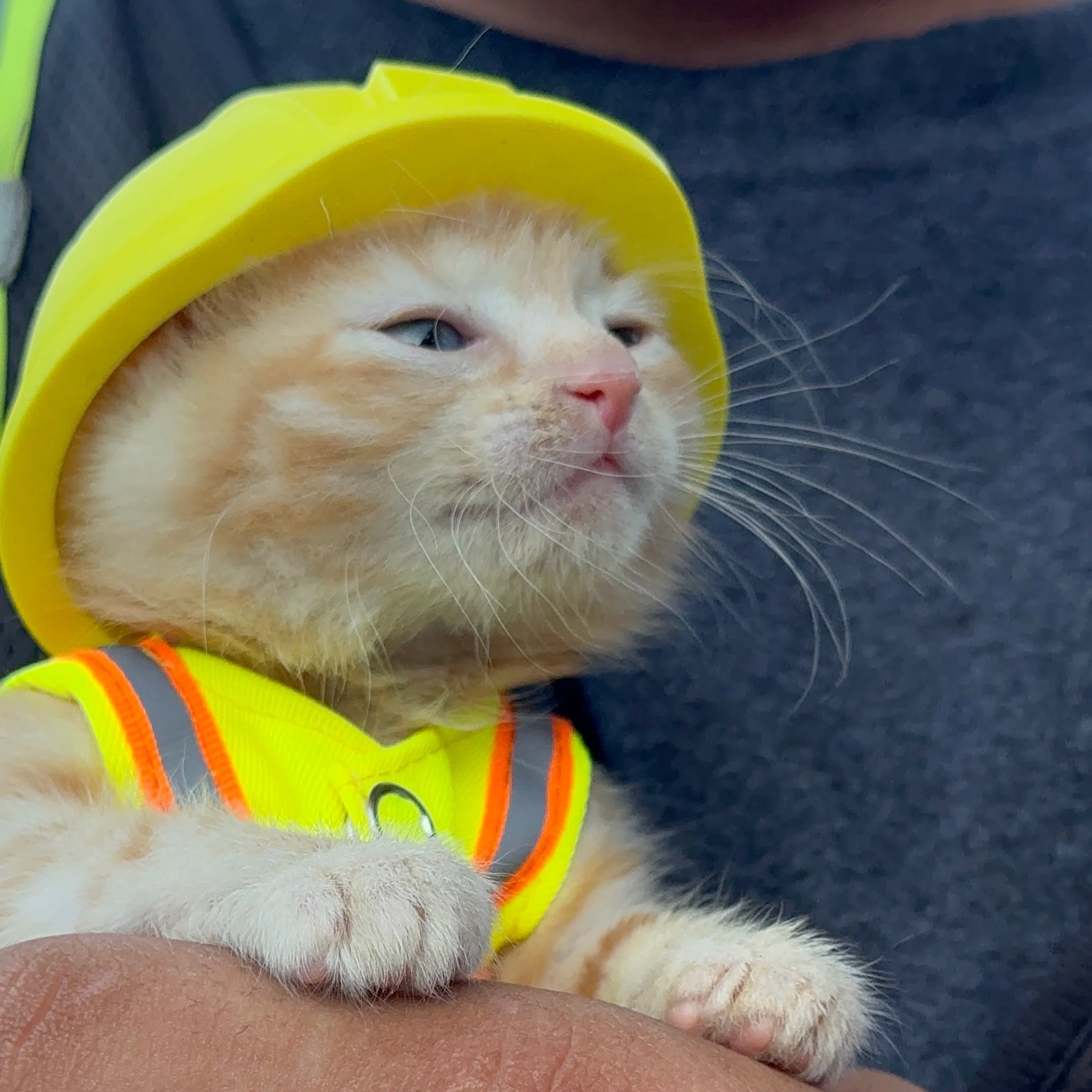
Komatsu North America also became involved, embracing its unexpected namesake and helping turn Sue into a recognizable character within the construction community. Sue appeared in miniature construction safety gear, including a hard hat and high-visibility vest, imagery audiences could immediately associate with the worksite where she was found.
From Viral Rescue to Branded Merchandise
As Sue’s following grew, Komatsu and River Reach Construction found a way to extend the story beyond social media.
The companies collaborated on a limited-edition merchandise collection featuring Sue alongside construction-themed imagery and branding from both organizations. The designs included T-shirts showing Sue in miniature safety gear, graphics featuring construction equipment and stickers depicting the kitten as a tiny member of the crew. The collection also expanded to include a stuffed animal, a cat toy and other merchandise.
In an August social media preview, Komatsu North America introduced the upcoming products with the message that the internet’s favorite rescue kitten was getting her own merch. The announcement drew questions from followers about availability, ordering and shipping. Those questions signaled audience interest, though comments alone can’t show how many people ultimately bought.
A Collection With a Charitable Component
The collection also supported animal rescue. Komatsu announced that 10% of its proceeds during the collection’s preorder period would be donated to Paws & Prayers Pet Rescue, an Ohio organization that helps animals in need. The pledge extended the story’s theme of animal rescue into the collection’s fundraising purpose.
The preorder storefront has since closed and is no longer accepting orders, and no restock has been confirmed. The companies announced a charitable commitment and offered products to an engaged audience, but publicly available information doesn’t establish the collection’s total sales, donation amount or broader business results.
Why the Merchandise Felt Connected to the Story
River Reach employees found Sue in a Komatsu excavator, and the crew named her after the machine. She wore miniature safety gear, a nod to the crew who rescued her. The designs brought those recognizable details together in products supporters could wear or collect. Here are pictures the team shared on their Facebook page:
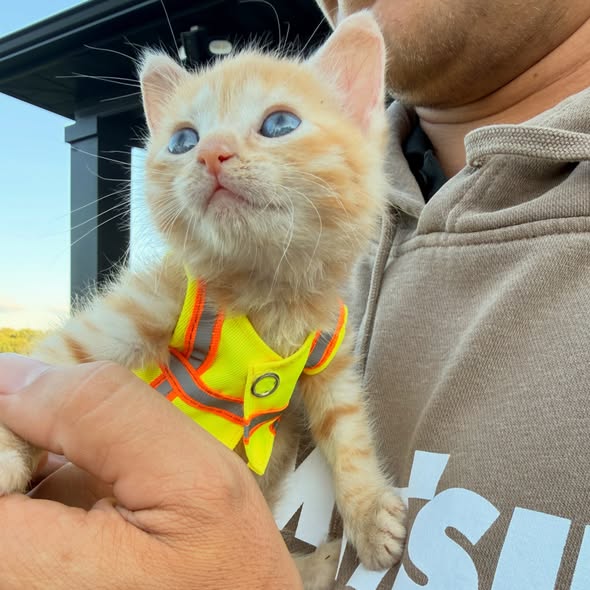
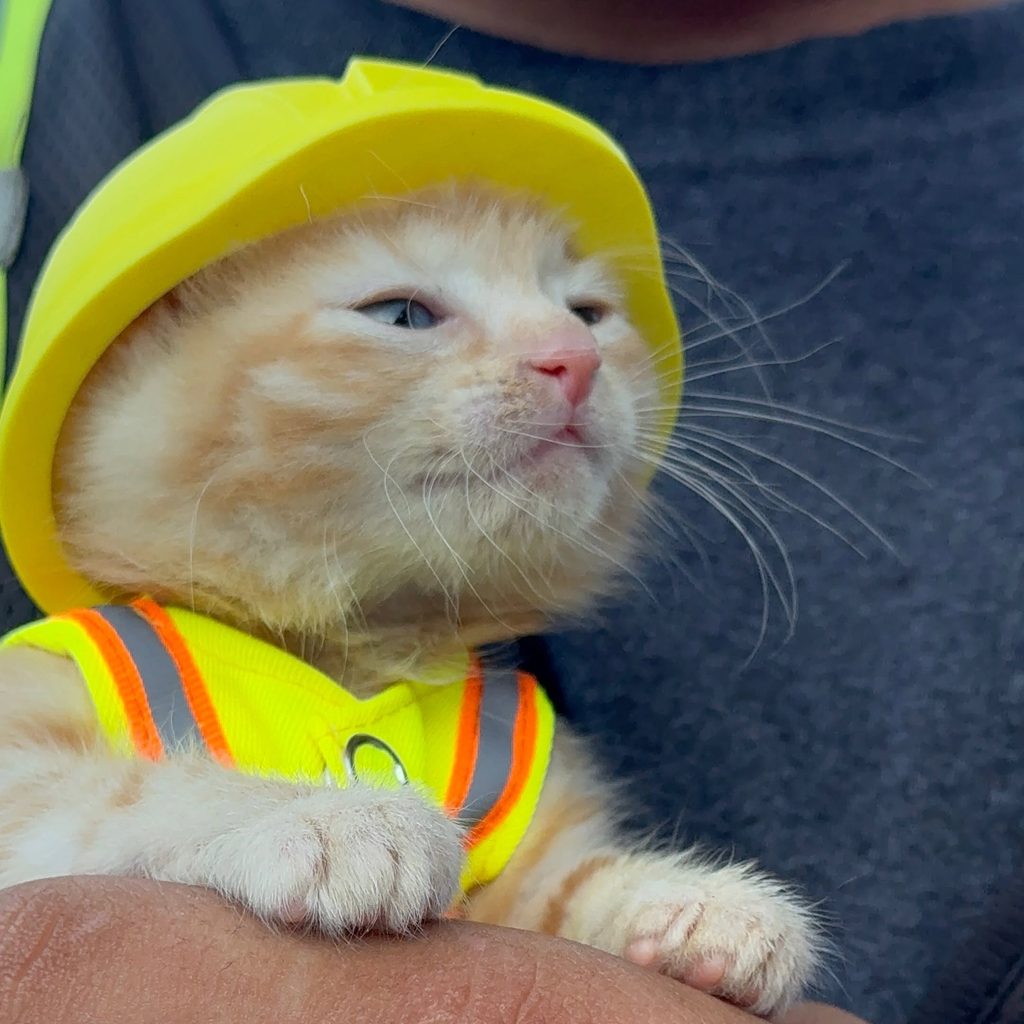
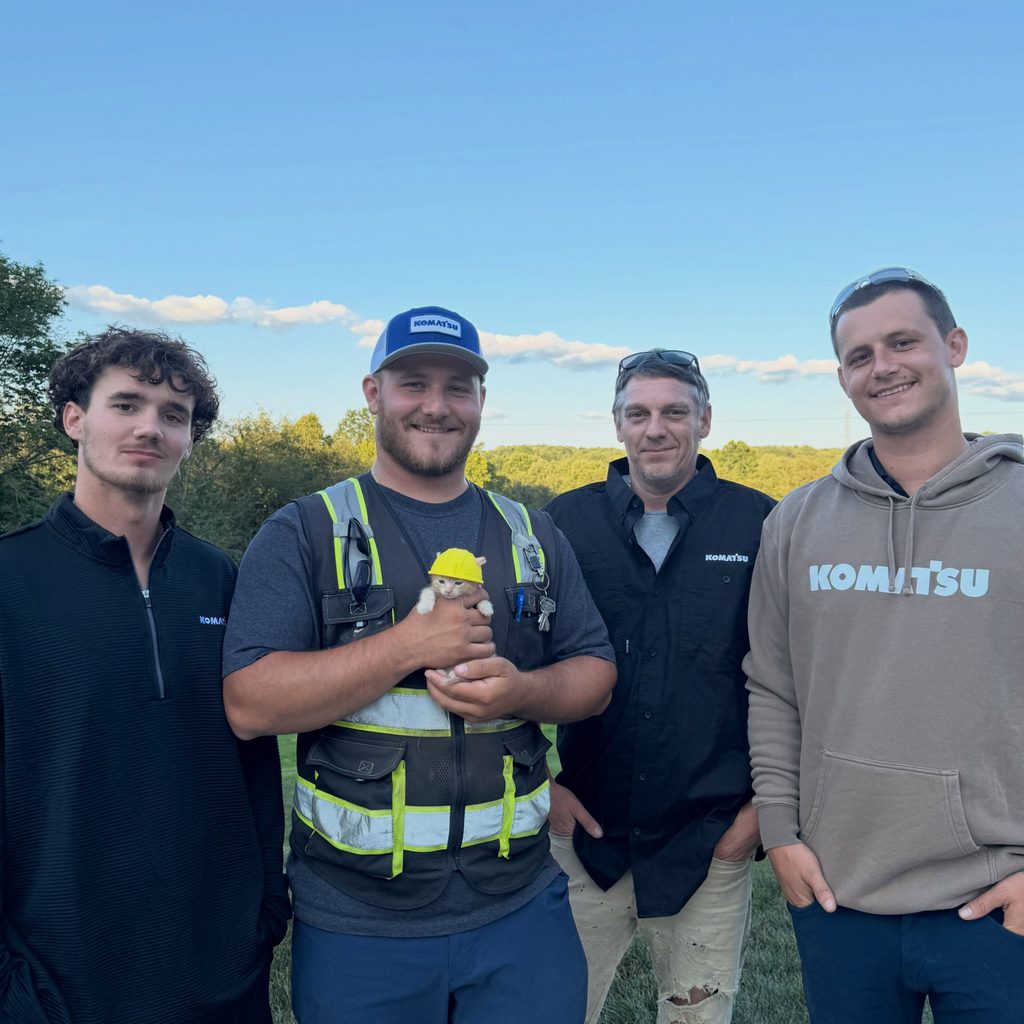
Both companies had a natural role in the story. River Reach was the crew behind the rescue, while Komatsu was the equipment brand that became part of the kitten’s identity. That made the collaboration more relevant than a generic animal-themed merchandise collection.
The products also gave supporters different ways to participate: apparel to wear, stickers to display and a plush toy to keep.
Planning principle: Use the details people remember about a story to shape the merchandise, from recognizable characters and places to the moments that made it meaningful.
What Marketers Can Learn From Sue’s Story
Many merchandise programs begin with a planned marketing objective, a product selection and a distribution strategy. In Sue’s case, the story came first.
A construction crew rescued a kitten, the companies shared updates and people became invested in what happened next. Merchandise followed as a way to extend that interest. The products had a clear reason to exist: a specific moment, a recognizable character and an audience that had already shown enthusiasm.
For marketers, the useful signal is an authentic experience that has already created a meaningful connection. That is the moment to consider whether a tangible product can give people another way to participate, keeping in mind that online attention alone doesn’t guarantee merchandise sales.
What this means for marketers: Branded merchandise is most relevant when it grows from something an audience already cares about. The opportunity is to preserve what made that connection meaningful, choose products that fit the story and give people a clear reason to keep participating.
Sue’s collection was temporary, but the example holds. A kitten rescued from an excavator became a character people followed, a link between two construction brands and the inspiration for a limited-edition collection. The products came after the story, giving people a way to carry a piece of it with them.