In September 2026, Burger King turned its updated chicken nuggets into a miniature handbag, giving customers a different way to engage with the menu launch.
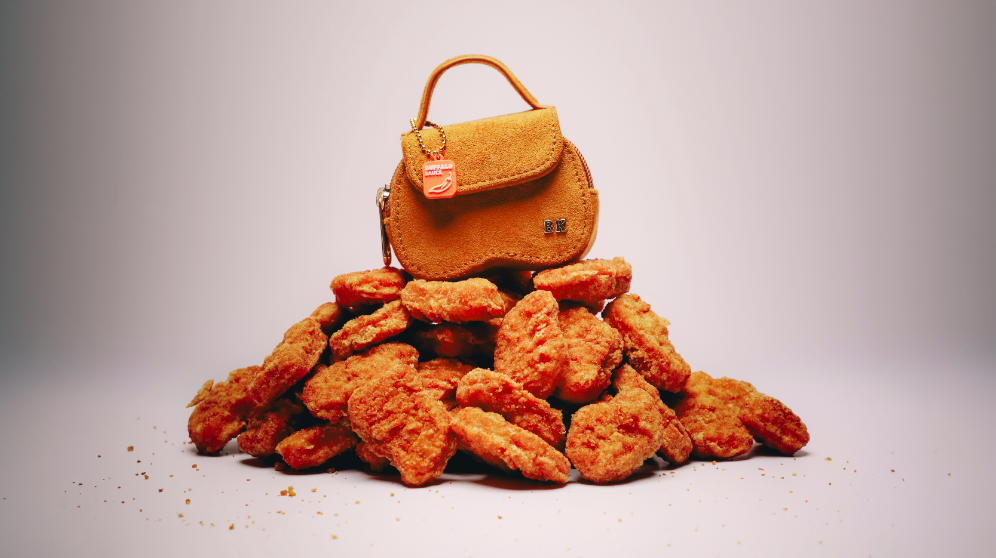
Called Le Nugguette, the limited-edition micro-bag was designed to resemble a chicken nugget and came with a charm inspired by one of the chain’s dipping sauces. It arrived during New York Fashion Week.
For marketers, the campaign shows how branded merchandise can extend a product announcement into a cultural moment. Burger King made the product it wanted to promote the inspiration for the merchandise itself.
From Menu Update to Micro-Bag
Burger King introduced its revamped chicken nuggets and updated dipping sauces nationwide in early September, responding to customer feedback about its previous recipe.
To promote the launch, Burger King worked with creative agency Mojo Supermarket on Le Nugguette. In its Sept. 10 announcement, Burger King presented the bag as a playful addition to fashion season.
Each Le Nugguette came with one of four sauce-inspired charms: Honey Mustard, Buffalo, Sweet & Sour or the new Special Savory. Each purchase also included a code redeemable for a four-piece order of Burger King’s chicken nuggets, connecting the collectible back to the food it was created to promote.
Together, the shape, charms and code made the merchandise part of the campaign’s creative concept.
Making the Merchandise Part of the Conversation
Micro-bags were already part of the fashion conversation. By introducing a nugget-sized version during Fashion Week, Burger King connected a familiar menu item to a trend outside the restaurant category.
In an interview with MediaPost, Burger King Vice President of Marketing Communications Allie Smith explained that the brand saw an opportunity to connect the micro-bag trend with its nugget launch and reach a different audience. Fashion and design outlets, including Hypebeast and Complex, covered the release.
The bag also carried the brand’s sense of humor. A tiny handbag shaped like a chicken nugget makes its joke clear at a glance.
A Limited Release With Strong Demand
Burger King offered Le Nugguette for $3.99, the same price as a 10-piece order of its chicken nuggets, with 100 bags scheduled to drop each day from Sept. 12 through Sept. 16.
The five-day release was available exclusively online, with purchases limited to one per household. According to MediaPost, each daily release sold out within seconds.
As USA Today reported, some customers complained that bags appeared to sell out before they could complete checkout. Others questioned the timing and fairness of the daily releases.
As seen in the comments of this specific Instagram post, a lot of customers expressed elation at “finally getting the bag” while there are still some that were not able to buy one.
A limited release can make a product feel special and create a clear moment for people to participate. When demand exceeds supply, the purchasing experience becomes part of how customers remember the campaign.
The reported sellouts show demand for the accessory. Public reporting doesn’t show whether the promotion increased nugget sales, changed perceptions of the new recipe or generated lasting customer engagement.
What Marketers Can Learn From Le Nugguette
Burger King’s campaign offers three useful considerations for brands developing merchandise around a product launch.
- Build the merchandise around the campaign idea. When the design comes straight from the product, the connection needs no lengthy explanation.
- Look for a relevant cultural moment. A trend already in motion, like micro-bags, can give merchandise a relevant entry point into conversations beyond the product category.
- Plan the experience beyond the product. The limited drops attracted attention, and the complaints show that availability, checkout and communication shape how a campaign is remembered.
What this means for marketers: A physical product can give an audience a new way to encounter a campaign. For a launch or cultural activation, a distinctive collectible can create a memorable brand moment when its design, timing and distribution all support the campaign’s purpose.