Vintage graphic tees are commanding hundreds, and sometimes thousands, of dollars. Their staying power offers marketers a lesson that has little to do with resale value.
Some T-shirts get worn once. Others stick around for decades.
At a recent ThriftCon vintage clothing convention in New York City, shoppers hunted for graphic tees connected to bands, television shows and other pieces of their past. One attendee was searching for an A Tribe Called Quest shirt. Another hoped to replace a lost Smashing Pumpkins tee. Some shirts on the racks were priced at more than $800.
And those aren’t even the extreme examples.
In “Your Favorite Old T-Shirt Might Now Be Worth a Fortune,” The Wall Street Journal explores a vintage T-shirt market where rare shirts can command four- and even five-figure prices. A 1967 Grateful Dead shirt previously sold at Sotheby’s for more than $17,000, while vintage dealer Patrick Matamoros sold a rare Nirvana tour shirt for $55,000 in 2025.
The eye-catching prices make good headlines. For marketers, though, the more interesting question is why people cared enough about these shirts to keep them in the first place.
A T-Shirt Can Become More Than Something To Wear
The answer isn’t simply age or scarcity.
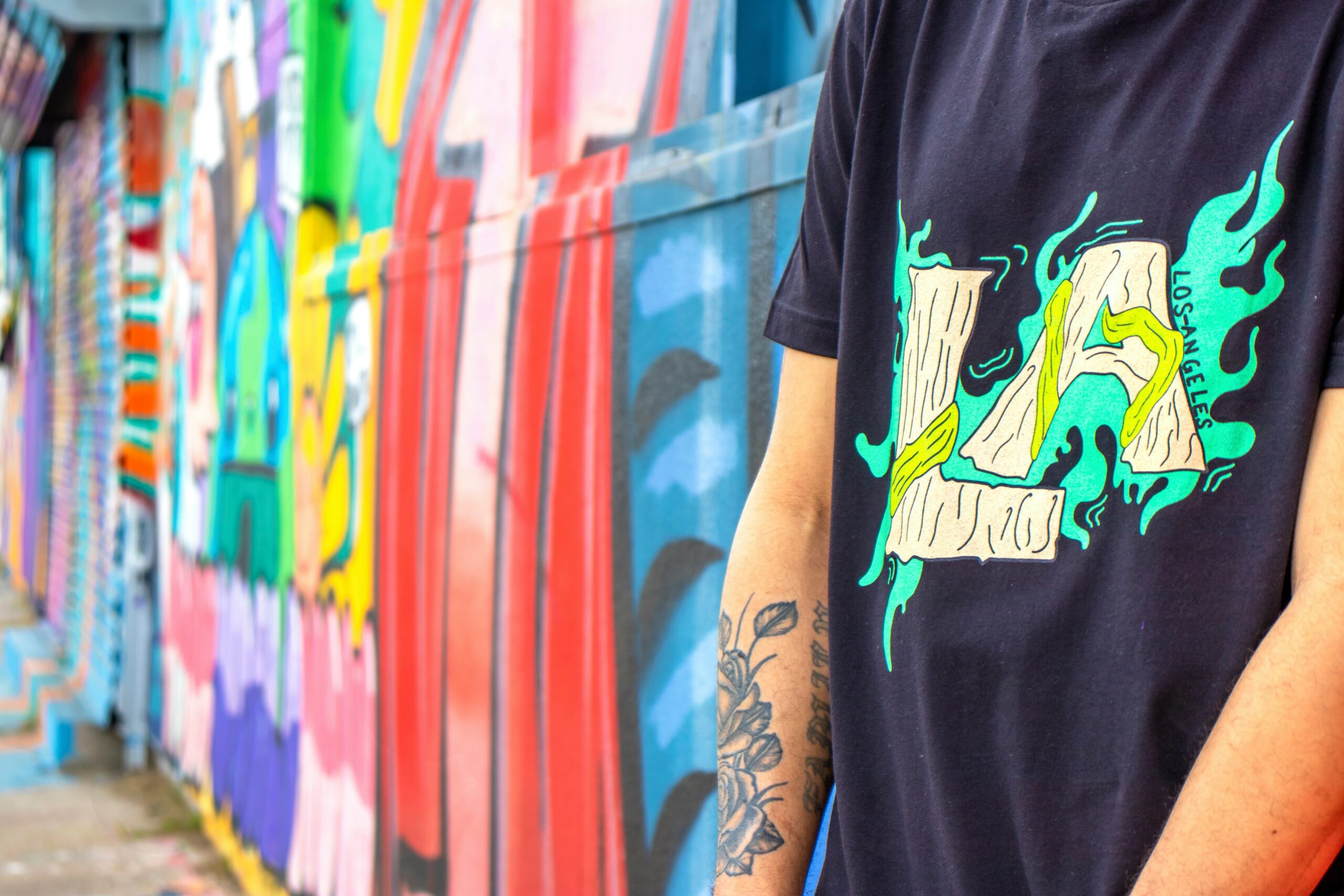
Branded merchandise tees can communicate something about the person wearing them: a band they love, a place they’ve been, a cultural moment they remember or a community with which they identify.
The Journal points to celebrities using vintage shirts in precisely this way. Janet Jackson wore a Tupac Shakur tee to the BET Awards as part of a look her stylist described as an expression of individuality. Miley Cyrus marked the 20th anniversary of Hannah Montana wearing an old shirt from the show. Zendaya wore an oversized Spider-Man tee while promoting a Spider-Man film.
In each instance, the shirt does something beyond covering the person wearing it. It communicates a story.
Keep that in mind, marketers planning branded merchandise. A logo can identify who made something. But identity alone doesn’t necessarily make someone want to wear it. Merch becomes more powerful when the object also says something about the person who chooses it.
The Best Merch Gives People A Reason To Choose It
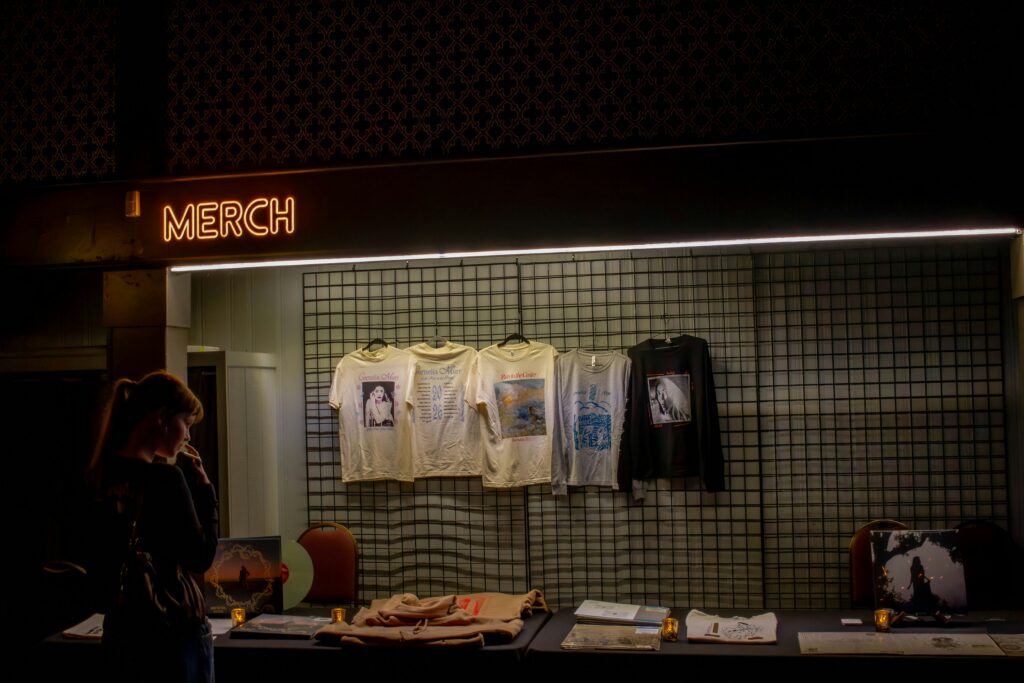
There’s a temptation to start a merchandise program with the product. Should we make a T-shirt? A tote? A tumbler?
A better starting point is the audience. What does this group care about? What connects them? What experience are they part of? What would they actually choose to wear or use? And what could the merchandise allow them to communicate?
Those questions change the job of a branded T-shirt. Rather than asking someone to advertise a brand, it becomes something the person wants because it represents an interest, memory, identity or affiliation that matters to them.
The distinction is visible throughout the vintage market. People aren’t searching for anonymous old cotton shirts. They’re searching for particular shirts, with particular stories attached.
Wear Can Be Evidence Of Value
There’s another lesson hiding in the vintage racks.
The signs of use that might normally make an object seem less valuable can make vintage apparel more desirable. Matamoros told the Journal that distressed shirts and shirts with holes were once difficult to sell. Today, buyers may seek out that lived-in quality because the garments have history.
For marketers, that doesn’t mean manufacturing artificial age or assuming every branded shirt should last for generations. It reinforces something more fundamental: Continued use gives branded merchandise more opportunities to remain present in someone’s life.
A well-chosen piece of branded merchandise can continue showing up in someone’s life long after the moment when it was originally received or purchased. A shirt might move from a campaign launch to a weekend wardrobe. An event tee can become associated with the experience itself. A piece connected to a community can continue signaling membership long after the gathering ends.
Every additional use gives the object another opportunity to carry the experience, and the brand associated with it, forward.
Quality Helps Make Continued Use Possible
None of this happens automatically.
People don’t preserve every T-shirt they’re given, and marketers shouldn’t look at exceptional vintage prices and conclude that simply printing a graphic on apparel creates lasting value. The more useful lesson runs the other way. If merch is expected to stay in someone’s life, it needs to deserve the space.
That puts greater importance on the decisions made before production: audience relevance, design, material, fit, quality and the moment in which the merchandise enters someone’s life. Quality can help determine whether something gets used repeatedly, forgotten in a drawer or discarded.
Design For The Life After Distribution
Vintage T-shirts represent an extreme version of merchandise longevity. Most branded apparel will never be auctioned, collected or resold for thousands of dollars, and that shouldn’t be the goal.
The more useful measure is whether someone wanted to keep it.
That question changes how marketers approach their brand’s merchandise. Don’t plan only for the moment an item is handed over. Think about what happens next. Will someone wear it? Will it remind them of something? Will it represent a community they want to belong to? Will it still feel relevant six months from now? Could it become part of their own story?
The vintage market shows what can happen at the far end of that spectrum. Decades after their original moment, some graphic tees remain wanted precisely because they still carry identity, memory and meaning.
For marketers, that’s the bigger opportunity behind branded merchandise. Make something worth choosing, and you have a better chance of making something worth keeping.
Original reporting: Marcus Holmlund, The Wall Street Journal, Aug. 18, 2026: “Your Favorite Old T-Shirt Might Now Be Worth a Fortune.”