For Prairie View A&M University, branded merchandise became more than a retail program. It became a way to extend identity, deepen participation and keep the university visible in students’ lives long after events ended.
That shift required more than new products. It required tighter brand governance, stronger storytelling, intentional partnerships and a clearer understanding of how merchandise could support community-building across the student experience.
“We stopped treating merch as a product and started seeing it as a platform,” says Candace Johnson, executive director of marketing and communications at Prairie View A&M, alongside Sierra L. Susberry, assistant director of marketing and communications.
Prairie View A&M’s approach shows how branded merchandise can build school spirit when it connects products to campus identity, student participation and meaningful moments. The strongest pieces were not just sold; they were tied to pride, memory and belonging.
Turning Merchandise Into A Participation Strategy
The university’s approach accelerated after Johnson attended the Collegiate Licensing Company’s HBCU Summit in 2024 and met Tahir Murray, founder and creative director of Legacy History Pride, an Atlanta-based apparel company specializing in HBCU merchandise.
Initially, the conversation centered around a single Prairie View A&M T-shirt. But university leadership saw a larger opportunity.
Instead of approaching merchandise as a standalone retail item, the team focused on how branded merchandise could support storytelling, participation and campus identity.
Murray was invited to campus to engage directly with students, athletics, the campus radio station, the College of Business and bookstore leadership. The goal was not simply product development. It was alignment between the university’s identity and the merchandise representing it.
“At the time, there was just one branded shirt sitting on a rack in the bookstore,” Johnson says. “From our perspective, we knew the merchandise would sell because it connects directly to our community. We just needed to tell that story.”
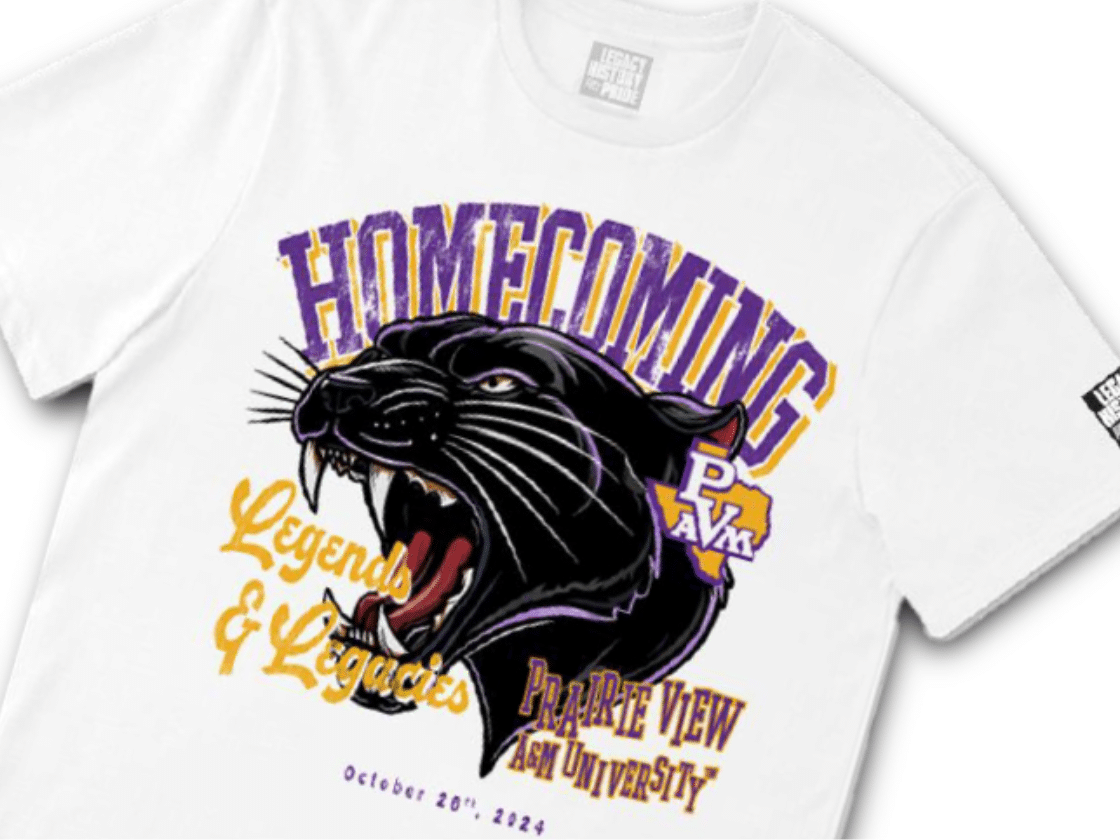
That story became especially visible during Homecoming, where merchandise became part of the broader campus experience rather than a separate retail transaction. As excitement around the collection grew, the bookstore expanded the university’s presence from one rack to four racks displaying the full capsule collection.
Why Relevance Drove Demand
Prairie View A&M’s success came from building merchandise around audience identity and participation rather than generic distribution.
The products reflected the culture, history and emotional connection students and alumni already associated with the university. That relevance changed how the merchandise was perceived and used.
“Our partnership with PVAMU is rooted in authenticity, intention and opportunity,” Murray says. “Sierra and Candace have not only welcomed me and my team to campus but have truly rolled out the red carpet for us.”
The university also created opportunities for students to become part of the process itself. Design contests allowed students to create concepts that moved from idea to store shelves, increasing both participation and emotional investment.
“They don’t just want to be in the picture anymore,” Susberry says. “They want to be part of the process.”
That participation extended beyond apparel into lifestyle-oriented categories such as hats, scarves, mugs, jewelry, kitchenware and home goods.
“Home goods, car accessories and kitchenware have been huge,” Susberry says. “Cutting boards, wine glasses — those categories are really resonating.”
The expansion reflected a broader strategic insight: merchandise creates more value when it fits naturally into people’s lives and routines rather than functioning as a one-time handoff.
Brand Governance As Brand Strategy
The university’s merchandising growth also depended on stronger brand governance.
Over several years, Prairie View A&M worked to clean up inconsistencies in trademarks, color standards and visual identity systems that had developed over time.
“We went through focus groups to find a color that all generations could connect to,” Johnson says.
The university also became more aggressive about trademark enforcement and protecting the integrity of its identity system.
“We went on a cease-and-desist spree,” Johnson says. “We wanted people to understand we’re serious about where our brand identity is headed.”
At the same time, the university began modernizing its panther icon to better reflect how it wants the institution represented moving forward.
“As we head into our 150th year, we want this to be the next step in how we present ourselves,” Johnson says.
The effort reinforced an important principle for marketers: quality, consistency and intentionality influence how branded merchandise reflects on the organization behind it.
Measuring Student Engagement Beyond Sales
Prairie View A&M also expanded how it evaluates merchandise success.
Rather than relying solely on retail sales, the university tracks activations, scans, landing-page traffic, attendance and audience engagement across events and launches.
“We build activations around product launches to see how quickly units move,” Susberry says. “We look at viewership, landing-page traffic, scans and attendance.”
Scan codes now help the university identify audience segments — including students, alumni, faculty and first-time visitors — while tracking engagement behavior over time.
“That checklist gives us the data we need,” Susberry says.
The university has also extended merchandise activations into community events and local retail partnerships, helping drive alumni engagement and broader visibility beyond campus itself.
What This Proves About Branded Merchandise
Prairie View A&M’s approach demonstrates how branded merchandise can support participation, identity and long-term community connection when it is treated as part of a broader brand and audience strategy.
The merchandise worked not because it was widely distributed, but because it felt relevant, intentional and connected to meaningful experiences.
The university’s strategy also shows how branded merchandise can extend the life of events and moments long after they end.
“They literally become brand ambassadors,” Johnson says. “So, we’re focused on how we take those core moments and tie merchandise to them, so students remember not just the moment, but the shirt, hat or mug associated with it.”
For marketers, the takeaway is larger than higher education or campus retail.
It is one more example of how merch moves when it is connected to a real audience need. In this case, it moved school spirit, participation and belonging by giving students and alumni a tangible way to carry Prairie View A&M’s identity with them.
When branded merchandise aligns with audience identity, participation and experience, it can become more than a promotional item. It can become a tangible extension of the brand —something people keep, use and carry into moments that matter.